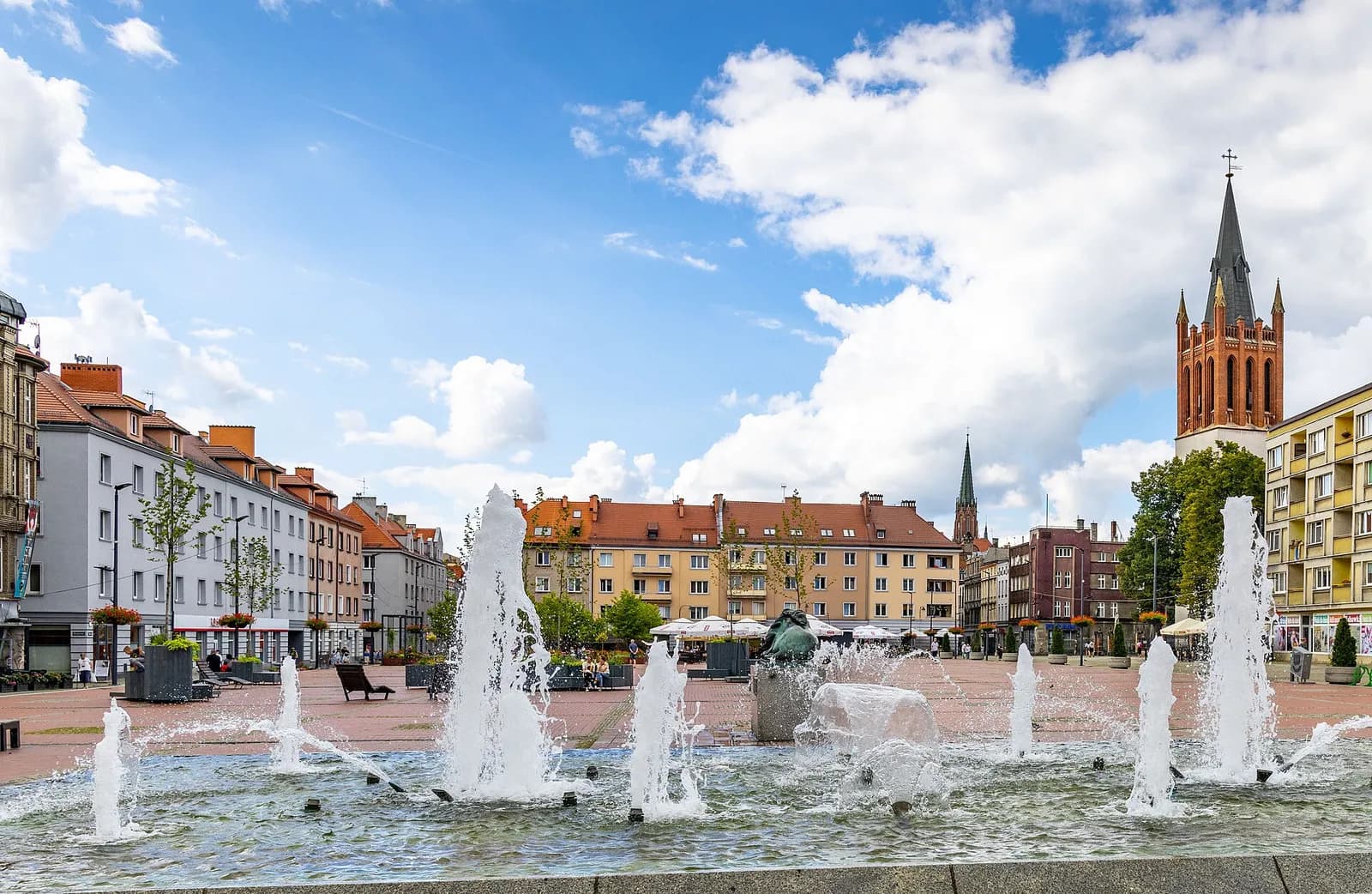
Bytom is one of Upper Silesia’s oldest towns, with a history that stretches back more than nine centuries. From its early beginnings as a fortified settlement to its rise as an important mining and industrial centre, the city has played a significant role in the development of the region.
Today, Bytom reflects the complex history of Upper Silesia: a place shaped by trade, industry, cultural identity and the challenges of economic transformation. Its historic buildings, industrial heritage and surviving landmarks continue to tell the story of a community closely connected to its past while building a new future.
Medieval Origins of Bytom
The origins of Bytom date back to the early 11th century, when a fortified settlement was established during the reign of King Bolesław I the Brave. Originally serving as a hunting fortress, the stronghold became an important point in the development of the surrounding area.
Archaeological discoveries and historical records provide evidence of this early settlement and its role in the region’s growth. Located in an area that would later become one of Poland’s most important industrial regions, Bytom’s position helped shape its long-term economic importance.
The town was first mentioned in written records in 1136, appearing in the Codex Diplomaticus Silesiae in connection with Benedictine monastery revenues and local trade rights. This early reference highlights Bytom’s importance as a developing centre of commerce and administration.
From Medieval Town to Mining Centre
In 1254, Bytom received its urban charter under German law from Prince Ladislaus I of Opole and Racibórz. The granting of town rights marked an important stage in Bytom’s transformation into a recognised urban centre.
During the following centuries, the city developed through trade, crafts and natural resources. Mining, particularly the extraction of lead and silver, became increasingly important to the local economy.
By the 14th century, expanded mining and metallurgy activities had strengthened Bytom’s position within the region. The foundations were being laid for the industrial identity that would later define the city.
Bytom and the Industrial Transformation of Upper Silesia
The 19th and early 20th centuries brought major changes to Bytom as industrialisation transformed Upper Silesia. The city became a significant centre for coal, zinc and lead mining, contributing to the region’s reputation as one of Europe’s leading industrial areas.
One notable moment in Bytom’s industrial history came in 1787, when Count Friedrich Wilhelm von Reden installed the first steam engine on the European continent in the town. This development reflected the region’s early role in technological innovation and industrial progress.
Mining and heavy industry shaped not only Bytom’s economy but also its urban landscape. Workers’ settlements, industrial facilities and late 19th-century architecture remain reminders of the period when the city grew rapidly alongside the expansion of Upper Silesian industry.
A Centre of Polish Cultural Identity
During the period when Upper Silesia was part of Prussia and later Germany, Bytom became an important centre for the Polish community.
The city was home to the only Polish gymnasium in Prussia and Germany, making it a significant institution for Polish education and cultural life. It played a role in maintaining Polish language, traditions and identity during a period when Germanisation policies affected many Polish communities in the region.
The history of this period also includes difficult chapters, including persecution affecting local Polish and Jewish communities, particularly during the Second World War.
Post-War Change and Preservation of Heritage
After the Second World War, Bytom became part of Poland and began a gradual transition away from its traditional dependence on heavy industry.
Like many former industrial cities, Bytom faced economic and social challenges as mining activity declined. At the same time, growing attention has been given to preserving the city’s historic character and recognising the importance of its industrial heritage.
A major recognition of this heritage came in 2017, when the Tarnowskie Góry Lead-Silver-Zinc Mine and its Underground Water Management System were inscribed on the UNESCO World Heritage List. Parts of this historic mining system extend into Bytom, highlighting the city’s connection to the wider industrial history of Upper Silesia.
Bytom Today: Heritage and Renewal
Modern Bytom is a city balancing its industrial past with efforts towards cultural and urban renewal.
Many historic buildings from the late 19th and early 20th centuries remain standing, offering visitors and residents a glimpse into the city’s prosperous industrial era. These architectural landmarks, together with Bytom’s mining heritage, form an important part of the city’s identity.
The city’s story is not only one of industry but also of adaptation. Bytom continues to preserve the memory of generations who built the region while creating new opportunities through culture, heritage and regeneration.
Bytom’s history reflects the wider story of Upper Silesia: a region shaped by changing borders, industrial development and strong local identity. From its medieval beginnings and mining traditions to its modern transformation, Bytom remains a city where the past continues to influence the future.